Jacinda’s country – exploring Jacinda Ardern’s Waikato roots
If you’ve heard anything about New Zealand in recent years, you’ll have heard of Jacinda Ardern. She was Prime Minister of New Zealand for five years, from 2017 to 2022.
Jacinda Ardern is as famous as hobbits, for many people. She’s been interviewed by just abut everybody in the global media, including Oprah and Time magazine. There are at least two good biographies written about Jacinda. Plus she’s written her own best-selling memoir, A Different Kind of Power. She’s the subject of an Emmy award-winning documentary, Prime Minister.
Jacinda Ardern was born and grew up in the Waikato region, and studied at the University of Waikato.
In this blog post I’ll cover some of the places where Jacinda lived before she entered politics.
Jacinda Ardern is one of the youngest women world leaders – she was only 37 when she took office. During five action-packed years, she led New Zealand through a series of unprecedented crises, including a terrorist mass shooting, a calamitous volcanic eruption at a popular tourist destination, and the Covid pandemic.
And if that wasn’t enough, she also gave birth to her daughter, Neve, during her time as Prime Minister.
Jacinda Ardern is seen as a symbol of new-paradigm young female leadership, emphasizing kindness and respect and emotional connection.
If you’re inspired by Jacinda, there are several places to visit in this region that are connected to her early life.
I haven’t met Jacinda personally, but I know people who went to school with her, and people who taught her at university. Some of her university professors have come to my ukulele classes. The Waikato is (relatively) a small place.
Visiting Jacinda Ardern’s home region
In this blog post I’ll cover some of the Waikato places which are mentioned in Jacinda’s bestselling 2025 autobiography, A Different Kind of Power (Penguin Books, New Zealand). It’s a great read. NB this is not an affiliate link.
These include the Hamilton suburb of Dinsdale, where Jacinda’s family lived when she was a baby; Te Aroha, where her father’s family came from; Morrinsville, where Jacinda Ardern attended high school and became interested in politics and social change issues; and Waikato University in Hamilton, where she studied before moving to Wellington and entering politics.
Murupara, where Jacinda’s father served as police sergeant in her early years, is just outside the borders of the Waikato region, in the Bay of Plenty.
There aren’t (yet) any local landmarks with Jacinda’s name on them. She’s only in her 40s and her career is still unfolding.

Te Aroha
Te Aroha is a small town on the eastern edge of the Waikato. It’s at the foot of Mt Te Aroha, which is the highest point in the Kaimai Ranges.
Jacinda Ardern’s father’s family lived in Te Aroha, and her parents, Ross and Laurell, met there as young adults. Her daughter, Neve, has Te Aroha as a middle name.
Te Aroha is a Maori phrase that is often translated as love or affection. It refers to deep emotional, communal, and spiritual empathy, rather than just romantic love. Here’s how to pronounce Te Aroha.
Te Aroha was a gold mining town in the 1880s, and there are mining relics to be seen at Waiorongomai Valley, just south of town.
The town is famous for its hot springs, and in the early 20th century was well known as a spa resort.
Things to do in Te Aroha
Te Aroha has plenty of activities for visitors.
Hauraki Rail Trail
Te Aroha is along the Hauraki Rail Trail, a cycle route which runs for 160km from Matamata to Thames along historic railway lines. You can hire a bike and do a small part of the trail, or ride the whole trail in sections.
Waiorongomai Valley historic reserve
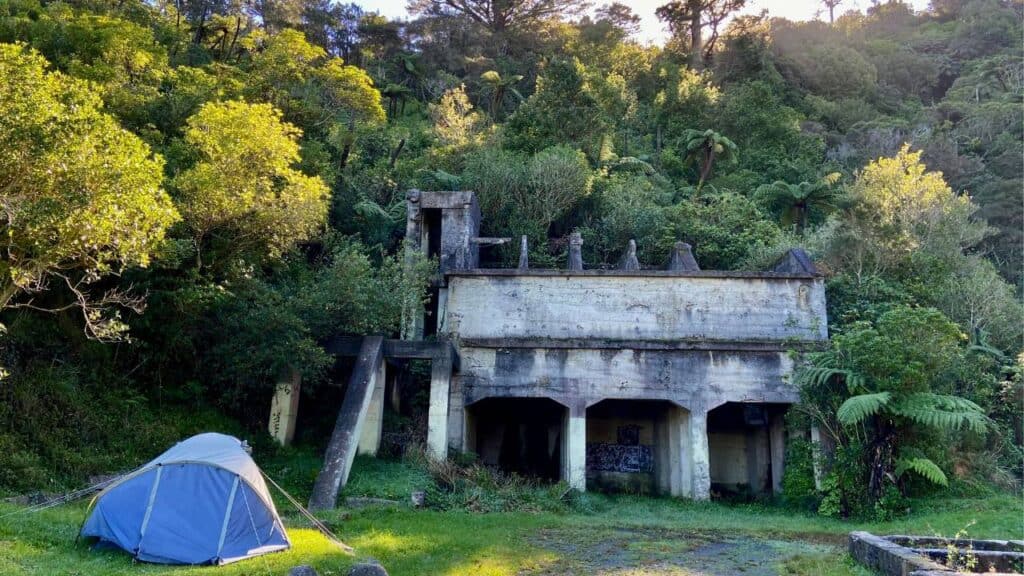
Waiorongomai Valley has looping trails through regenerating bush and former gold mine sites, with machinery and tramways and tunnels. It’s 10 minutes’ drive south of Te Aroha.
Take a picnic and spend a few hours exploring the trails.
Mt Te Aroha summit walk
The popular hike to the summit is steep and takes up to three hours, one way. Whakapipi Lookout is 45 minutes along the summit track.
Mokena Geyser
This is a natural soda water geyser in the Te Aroha Reserve. Visitors can see it for free. Follow the path up the hill behind the Te Aroha Mineral Spas building. But be prepared to hang around – it’s unpredictable! (The day I visited, it went off as soon as I gave up and walked away.)
Te Aroha Mineral Spas
A great place to unwind in luxury hot pools, after walking up Mt Te Aroha, or cycling part of the Hauraki Rail Trail, or exploring Waiorongomai Valley.
Morrinsville
Jacinda Ardern lived in Morrinsville from the age of 7 and attended local schools. At her high school, Morrinsville College, some inspiring teachers, especially her social studies and history teacher, nurtured her passion for politics and social justice and her talent for public speaking.
Morrinsville isn’t an epic, extraordinary tourist destination. It’s a modest provincial town serving the dairy industry, which is the economic backbone of the Waikato region.
Jacinda’s family lived on a small apple orchard at the edge of Morrinsville Golf Course.
The Golden Kiwi takeaway, where Jacinda Ardern worked as a teenager, is still on the main street, under new ownership.
What to see in Morrinsville
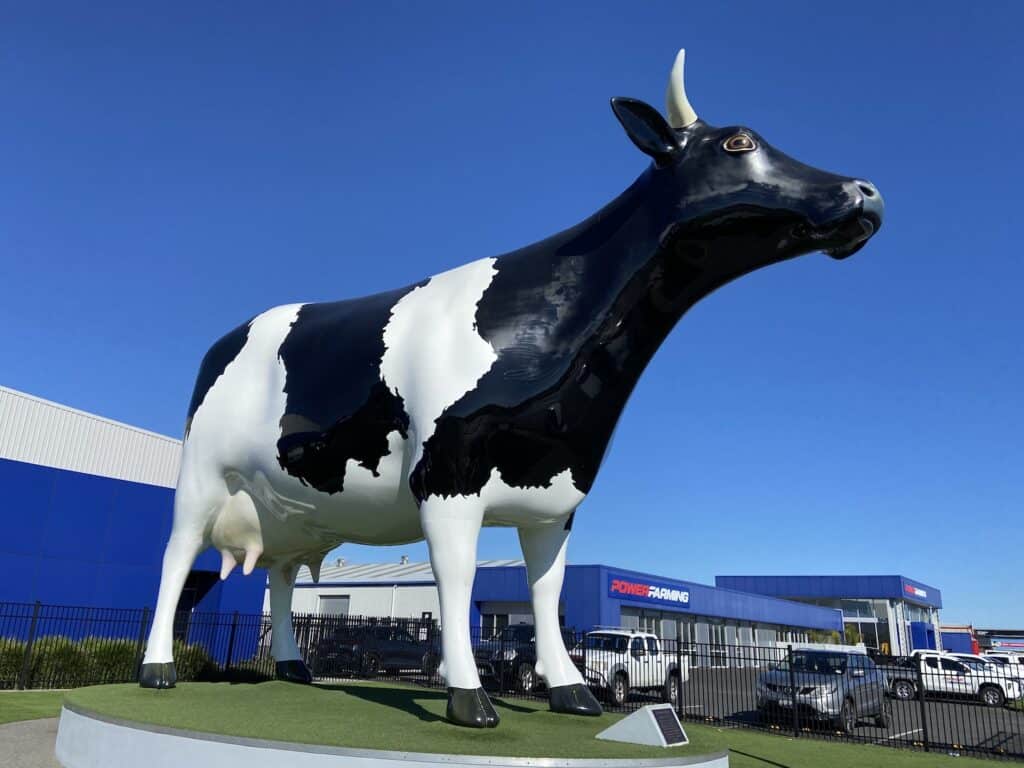
The outstanding visual feature of Morrinsville is a series of colourful life size fiberglass statues of cows. They’re all along Thames St (the main street), and also in the blocks around the centre of town.
At the west end of town, you can’t miss a giant statue known locally as “Mabel, the Morrinsville Mega Cow”.
The Morrinsville Gallery, at 167 Thames St, is a regional art hub. It hosts regular art exhibitions featuring artists from all over New Zealand, as well as a permanent art collection.
Morrinsville is the business headquarters of another remarkable Waikato woman, fashion designer and philanthropist Annah Stretton. She has a small museum of fashion and social impact at 148 Thames St. It’s worth a visit if you’re interested in fashion.
Dinsdale, Till’s Lookout and Temple View
Dinsdale is a suburb in southwest Hamilton where Jacinda Ardern’s family lived at the time of her birth. According to Time Magazine, Dinsdale was her birthplace.
Dinsdale is a low-profile residential suburb. The most interesting feature for visitors is Till’s Lookout. Till’s Lookout can be accessed from Melva St, and also from Amanda Ave.
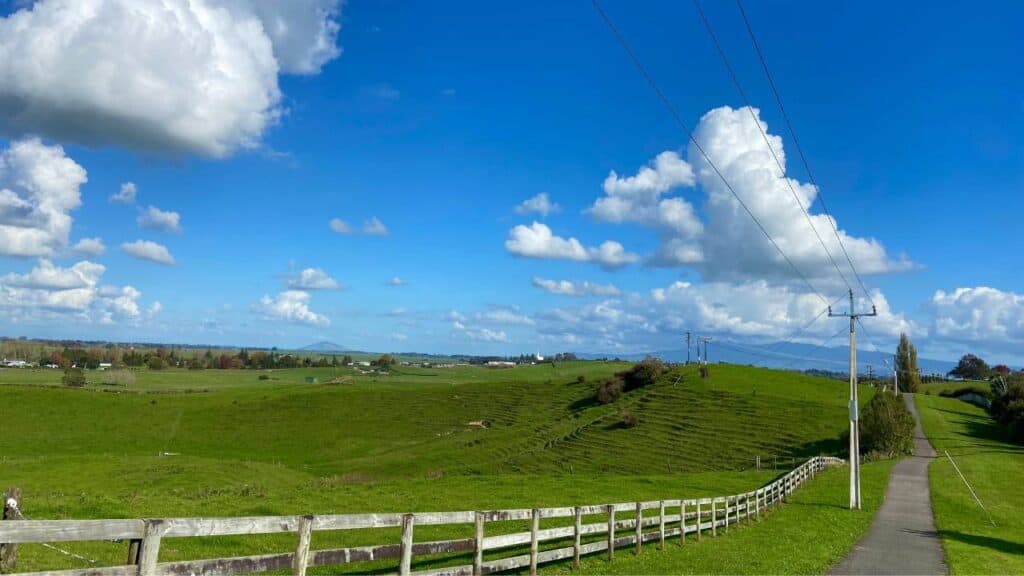
From the lookout, there’s a walkway and cycleway following a ridge with panoramic views of the Waikato landscape, including across to the Mormon temple at Temple View. The walkway goes all the way to Taitua Arboretum.
Jacinda Ardern’s family was Mormon. Her uncle, Ian Ardern, is a high-ranking General Authority of the church (emeritus).
Temple View was established in the 1950s as a settlement of the Church of Jesus Christ of Latter Day Saints. As well as serving the local Mormon community, the temple hosts a famous annual Christmas lights festival.
Jacinda left the Mormon church in her early twenties, because her strong support of equal rights for gay people was incompatible with church teachings.

Waikato University
Jacinda Ardern studied at Waikato University‘s Hamilton campus from 1999 to 2001. She graduated in 2001 with a Bachelor of Communication Studies, majoring in politics and public relations.
Waikato University, in the east Hamilton suburb of Hillcrest, is the biggest tertiary education provider and academic research centre in the Waikato region, with more than 12,000 students from all over the world. The university offers a wide range of degrees, undergraduate and postgraduate.
Waikato University has mostly plain mid-20th century modernist architecture – it was founded in the 1960s. However, there are pleasant tree-lined walkways through the campus and around the lakes. The most elegant building on campus is the Gallagher Performing Arts Centre, which has some great performance spaces, well used by music students and community organisations.
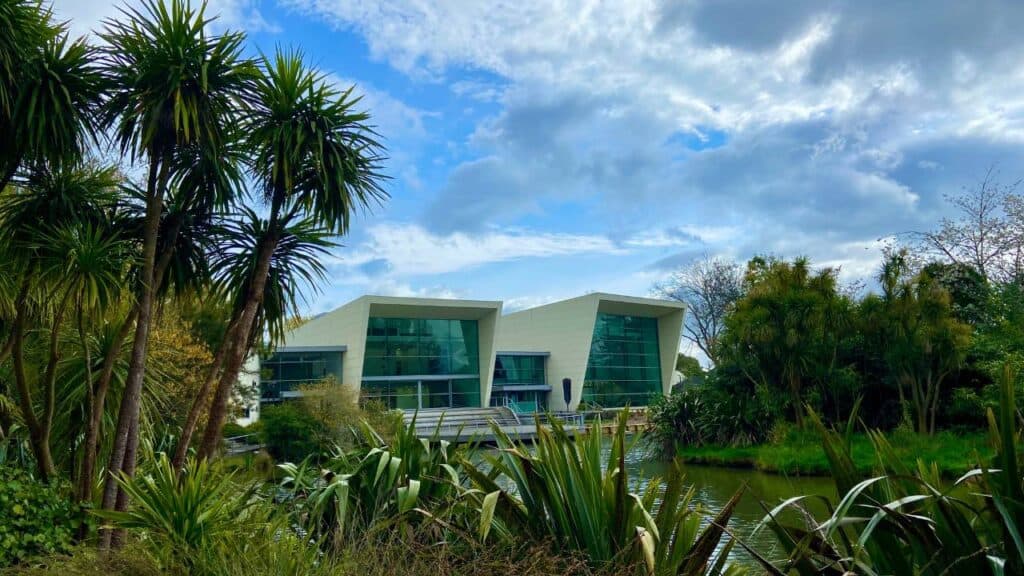
The most recent addition to Waikato University is The Pā, which was opened in 2024. It’s a multifunctional building featuring distinctive Māori design. There’s a beautiful entrance area on Hillcrest Rd.
The Pā incorporates a wharenui (Māori meeting house), the Faculty of Māori and Indigenous Studies, the vice-chancellor’s office and a student hub with cafes and terraces with outdoor eating spaces.
Murupara
Murupara is a small, very remote timber mill town at the edge of the Kaingaroa Forest, in the Bay of Plenty.
Jacinda Ardern’s family lived here for three years in the mid 1980s. Her father, Ross Ardern, was the local police sergeant.
Murupara’s population is 90 percent Māori . The town is economically challenged because of privatisation of the forestry industry since the 1980s.
Tourism in Murupara
Māori cultural experiences
Kohutapu Lodge on Lake Aniwhenua, near Murupara, is a whanau (family) owned business offering Māori culture experiences for visitors.
Outdoor adventure
Murupara’s location means it is close to many kinds of outdoor activities, including hiking, hunting, fishing and river rafting. The Rangitaiki River flows through the town.
Murupara is also known as the gateway to Te Urewera National Park and Whirinaki Forest Park.
Stay in touch
I hope I’ve given you plenty of reasons to visit some of Jacinda Ardern’s home places in your Waikato travel plans.
Another famous New Zealand prime minister, Helen Clark, also has Waikato roots. Her family farmed at Te Pahu, not far from Raglan.
Feminist professor and former National Party MP Marilyn Waring comes from Taupiri, also in the Waikato.
If you enjoyed this post, sign up to my email list to stay in touch. I’ll let you know whenever I publish new ideas for slow travel in New Zealand’s green heartland.