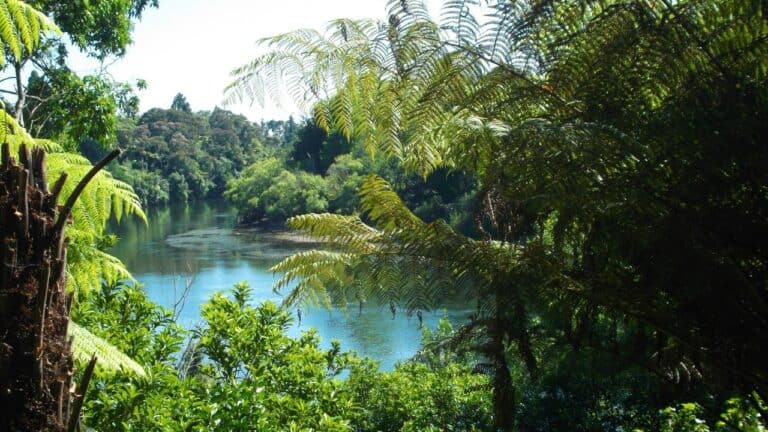
Where to buy local food in the Waikato
This post is an introduction to local food in the Waikato.
In this post I’ll cover what some of the famous local foods are. And where to buy local food in the Waikato, so you can enjoy some of our great seasonal flavours and local delicacies when you visit.
It’s a subject very close to my heart. And stomach. I’m like a hobbit. I enjoy eating.
It’s easy to buy great quality fresh food in the Waikato, if you know where to go. Locally grown meat, locally caught fish, vegetables, in-season fruit, honey and more.
This post isn’t really about restaurants and cafes (that’s a topic for another day).
New Zealand, as a nation, isn’t well known for traditional food cultures. But we are famous for producing food.
And the Waikato is one of New Zealand’s main food producing regions. Dairy farming is the biggest part of the local economy. But there are many other crops grown in this part of New Zealand. Everything from kiwifruit to honey and chestnuts.
I’ve been interested in local food ever since I came to live in the Waikato, nearly 20 years ago. On the first weekend I went to the Hamilton Farmers’ Market for the first time. For several years I wrote a local food blog called the Waikato Food Basket, which celebrated the food of this region. This slow travel blog, the Waikato Day Tripper, has developed out of my adventures with the Waikato Food Basket.
Famous New Zealand foods
Some of the foods that New Zealand is known for include lamb; fish and other seafood; kiwifruit; manuka honey; and dairy products, including milk, butter, cheese and ice cream. There are farms and businesses producing and selling all of these in the Waikato region. And in this post, I’ll tell you where to find them.
Local food in New Zealand – a paradox
New Zealand produces wonderful fresh food. But most of it isn’t eaten by New Zealanders. It’s exported. New Zealand’s national economy is largely based on exporting food overseas.
And much of the food sold in New Zealand supermarkets – including meat, fresh vegetables and fruit – is imported! Usually there are labels stating country of origin, but not always.
I find this pretty annoying and frustrating.
Here’s my blog post where I say a lot more about the paradox of local food in New Zealand.
New Zealand’s local food economy is a recent development. The farmers’ markets have been going barely 20 years.
Local farmers’ markets
In the Waikato, our local food economy has been growing in recent years. One way to measure this is the increasing popularity of the local Waikato farmers’ markets.
These are the easiest place to find local seasonal food.
Cambridge Farmers’ Market takes place every Saturday morning, and Hamilton Farmers’ Market is on Sunday mornings.
Raglan also has a local food market, and there are other regional markets at various times of the year.

Local food and slow travel
Local food is an important aspect of slow travel. In fact slow travel has some of its roots in the Slow Food movement. This is a worldwide initiative, founded by Italian chef Carlo Petrini, highlighting local food producers and traditional cooking.
Traditional foods from many cultures can be found in the Waikato, including Māori foods and cultures representing our diverse immigrant populations.
Waikato dairy products
Even though most of the milk and butter produced in the Waikato is exported, there are also local farms producing premium quality milk for local markets. And there are some notable cheese makers in this region.
Local milk producers
I know of three excellent local milk producers. These are all small-scale farms, by the standards of the huge New Zealand dairy industry.
Matamata-based Jersey Girl Organics sell certified organic, A2 full-cream milk at the Waikato farmers’ markets, and also at some local retailers and supermarkets.
Dreamview Creamery, near Raglan, supply both raw and pasteurized milk in glass bottles through home deliveries. They also sell at some retailers.
Kaipaki Dairies milk, from a family farm south of Hamilton, is distributed in refillable glass bottles and through stainless steel taps at cafes and other businesses. I found Kaipaki milk served with my pot of tea at the café at Hamilton Zoo.
Local cheese makers
Since the Waikato is so famous for dairy farms, it’s not surprising that there are also some outstanding local cheese makers. (As well as the big blocks of plain New Zealand cheddar that you’ll find in supermarkets.)
The Meyer family make award-winning Dutch-style cheeses in their Hamilton factory. You can find a small selection of Meyer cheeses in New World supermarkets. But for the full range, check out the Gouda Cheese shops in Hillcrest and Rototuna.
Over The Moon, based in Putaruru, are well known (also award-winning) artisan cheese makers. They offer cheese making workshops and tours, as well as selling their cheeses at local farmers’ markets and at their shop in Putaruru.
Cilantro is a small company selling fresh goat milk and artisan cheeses, from their Hamilton factory, and a few stockists.
The Cheese Barn at Matatoki, on the Thames-Paeroa highway, make certified organic cheeses and yoghurts. They have a shop and café.
Local ice cream and gelato
Ice cream is a big deal in this country. According to the New Zealand Herald, New Zealanders are among the world’s biggest ice cream consumers, getting through an astounding 28 litres of ice cream per person per year. (I enjoy ice cream myself, but somebody must be eating most of my share!)
Well-known New Zealand ice-cream brands which are commonly available in supermarkets include Tip Top and Kapiti.
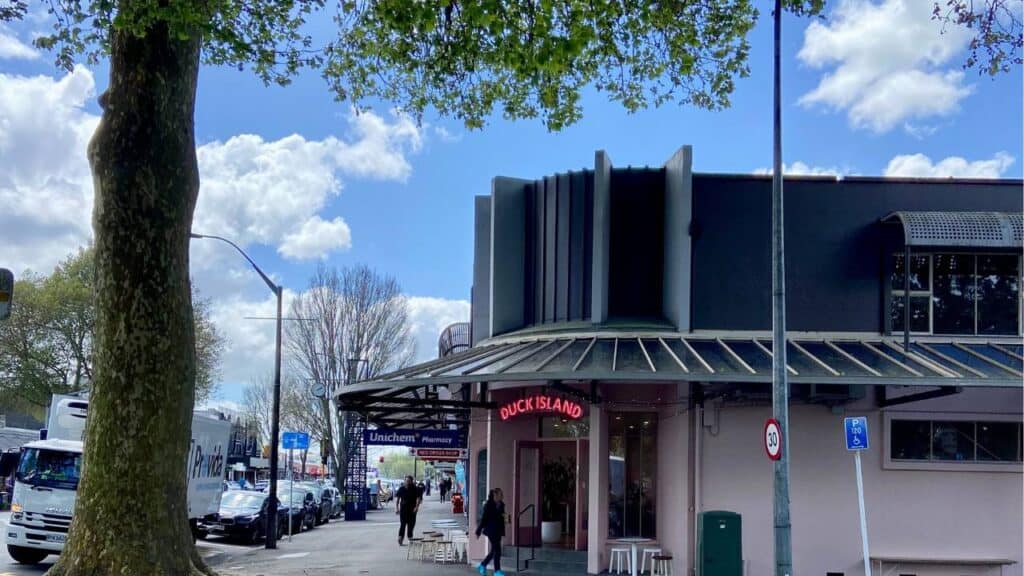
Duck Island ice cream – a local favourite
The Waikato’s famous locally made ice cream is Duck Island, named after the local nickname for Graham Island, in the Waikato River near Hamilton East.
The original Duck Island shop is on the corner of Grey St and Cook St in Hamilton East. There are now outlets in most major New Zealand cities.
Their ice creams are quirky and playful. With 18 flavours (including non-dairy options), there’s something to wake up the most jaded palate. One of my favourites is the wonderfully tangy peppermint slice.
Raglan Gelato
Superb, European-style gelato. Possibly not a dairy product, but I’m a fan so I’m including it here! Available from a pop-up stall in Bow St, Raglan, during the summer; at festivals throughout New Zealand; and at Gourmet in the Gardens at Hamilton Gardens on Sunday evenings in the summer. (Check out my post about Hamilton Gardens here.)
Seasonal fruit
Most of the fruit that’s grown in the Waikato is a seasonal treat, only available for short times of the year.
Blueberries
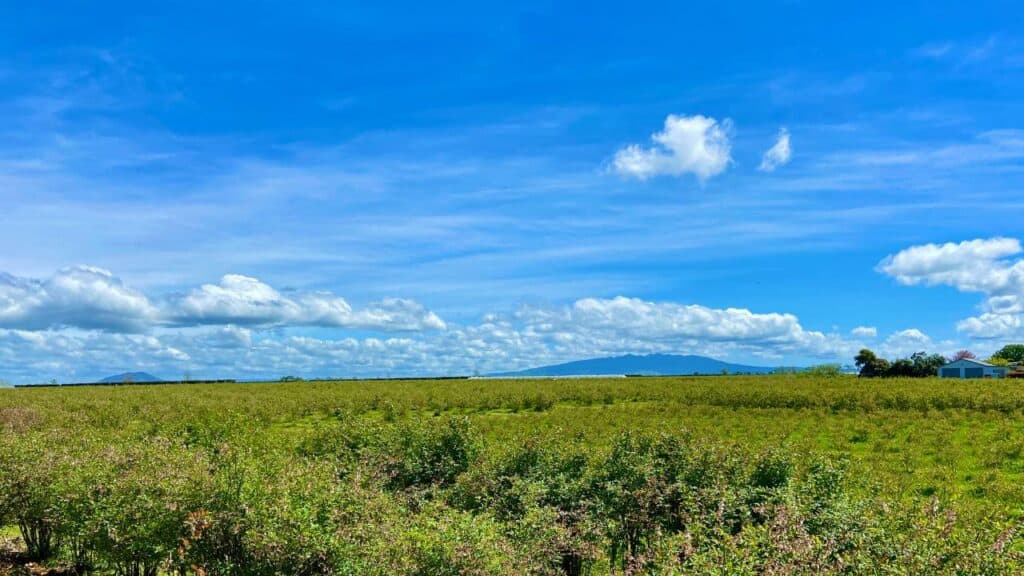
Blueberries are a great Waikato fruit experience: the peat swamp ground of this region suits blueberries well. Local blueberry farms include Monavale Blueberries, near Cambridge, which is a fully certified organic orchard. Their popular restaurant, featuring blueberry recipes, is open year-round. Other local blueberry farms include Blueberry Country, Ryburn Gardens, and the Lavender Backyard Garden, which has both lavender and blueberries in season.
Strawberries
Strawberries are another seasonal delicacy. Kanes Strawberries are local producers with a strong reputation for quality. They sell at local farmers’ markets and also at their farm stall – there are often lines of buyers waiting!
Newstead Orchards – apples, pears and plums
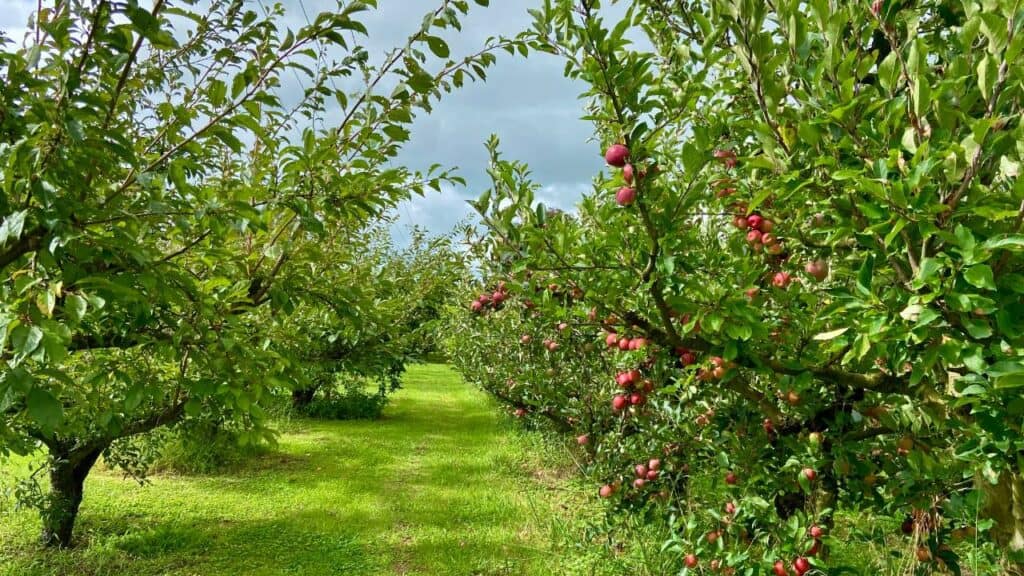
For apples, pears and plums in season, Newstead Orchard near Hamilton grow many delicious heritage varieties. They sell at the farmers’ markets and also at their orchard shop on Morrinsville Rd.
Oranges, mandarins and tangeloes
Oranges, mandarins and tangeloes are grown locally, especially in Ohinewai, north of Huntly. Find these at the local farmers’ markets in season (midwinter to spring).
Kiwifruit
The biggest kiwifruit growing region in New Zealand is the Bay of Plenty. However there are also kiwifruit farms in the Waikato, especially in the Karapiro area, which produce fruit for export rather than local markets.
The Tender Fresh stall at Hamilton Farmers’ Market sell locally grown kiwifruit. They say we only get to eat the “seconds” – the best quality fruit is exported. This probably applies to kiwifruit sold in supermarkets too.
Grapefruit and feijoas – New Zealand treasures
Two local fruits that you might not have heard much about, but I think they should be famous, are New Zealand grapefruit and feijoas.
Both can be found dropping off backyard trees in the Waikato, in the right season. But neither has much local market value.
Southern Belle Orchard, in Matamata, grow superb export quality feijoas – you can buy them at the farmers’ markets in season, as well as their superb sweet peppers/ capsicums.
Seasonal vegetables
For in-season locally grown vegetables, the place to go is local farmers’ markets.
Outside the markets, two Hamilton growers I know about are Tomtit Farm in Matangi, and Earth Stewards in Huntington. Both are certified organic, which is a bonus.
Fish and seafoods
The best place for locally caught seafood is Raglan Fish, at Raglan Wharf, at the end of Wallis St, a couple of blocks out of town. They sell excellently fresh fish that’s been caught by local boats. There’s a fish restaurant and you can also buy fish to take home to cook.
Raglan Fish also have a stall at Hamilton and Cambridge Farmers’ markets.
Not all the fish they sell is locally caught – they also buy in fish from Auckland fish markets because of consumer demand. E.g. tarakihi is a popular fish variety that’s not caught by the local boats.
At Kawhia there’s often a stall selling locally caught fish.
Kawhia Harbour also has oyster farms. The Raglan Fish stall at the farmers’ markets sells Kawhia oysters. (Probably most of them go to upmarket restaurants.)
Green lipped mussels are a famous New Zealand seafood that will always be local and sustainable, even if you buy them from a supermarket. They’ll almost certainly come from the mussel farms on the Coromandel Peninsula.
Local meat
New Zealand meat has a great reputation for grass-fed quality. However, supermarket meat is fairly likely to be imported and may not be grass fed. Check the labels.
The places to find locally produced quality meat are the farmers’ markets and a few local butchers.
Stalls at the farmers markets include Soggy Bottom Holdings, which sells locally grown pork, bacon, sausages and sometimes beef and lamb. Also English delicacies like pork pies and black pudding.
Also at the Hamilton Farmers’ Market, Pikiroa Farm sells great quality certified organic lamb and beef.
Wholly Cow sell locally grown beef and lamb at their butchery in Cambridge.
Land of honey
There are three local honey producers selling regularly at the farmers’ markets.
These are Sweetree Honey, Hunt & Gather Bee Co, and Black Shepherd Apiaries.
They all sell superb honey from different flowers and different places, including manuka honey, which is famous for its medicinal properties, as well as being delicious.
Hāngi and other Māori cultural foods
Māori food delicacies include hāngi, which is vegetables and usually meat (but I’ve also experienced a delicious vegan hāngi). Hāngi is slow-cooked, traditionally for many hours in an earth oven – but there are also some innovative above-ground hāngi cookers.
Seafood or kaimoana is important in Māori food culture, including paua, mussels, whitebait and ika mata (marinated fish).
Traditional Māori breads include rewena paraoa, a distinctive, slightly sweet sourdough bread often made using kumara or potato in the sourdough starter. Another Māori bread is takakau, a quick, unleavened baking powder bread that’s equivalent to Irish soda bread.
Other traditional fermented foods include kānga wai, fermented corn.
One of the best places to experience Māori foods is the Kawhia Kai Festival on Waitangi weekend (somewhere around February 6th)
It’s one of the Waikato’s most famous food festivals. It’s low-key and mainly aimed at locals, but it also gets a big thumbs up from Lonely Planet.
Go early – it’s a popular event. And don’t eat a big breakfast. Save some space!
Other places to find Māori kai: The annual Turangawaewae Regatta, in March, features food stalls with Māori cultural delicacies.
There’s a hāngi stall at the Night Market, Friday evenings at Waikato University, but I haven’t tried it yet.
If you go to a Māori cultural show at Rotorua you’ll almost certainly be served a traditional meal as part of the package. Food hospitality is highly valued in Māori culture.
Local beers and other beverages
Popular local beverages include beers, locally grown tea, and Raglan Roast coffee (although to be honest, coffee beans are not grown in the Waikato).
Local beers
If your taste in beer is mainstream, there’s a famous local beer called Waikato Draught, which you can find at most bars.
If you enjoy craft beers, the best known of the local craft breweries is Good George, which produces a range of beverages, including the excellent brews served at Hobbiton. Here’s my post about visiting Hobbiton.
There are Good George bars at Frankton and Rototuna, and their beers and ciders are also found in available in supermarkets and liquor stores.
There are several other local craft breweries. Brewaucracy has a brewery and taproom in Te Rapa, on the northern side of Hamilton. There’s also Hypnotic, and Bootleg, which is based in the Matangi Dairy Factory.
In Raglan the local craft beer is Workshop Brewing.
Tea and coffee
Zealong Tea Estate, at Gordonton, a short drive out of Hamilton, is New Zealand’s only commercial tea producer. The Zealong tea house is a lovely place to visit. It features their excellent tea range (certified organic) and various meal options.
Zealong tea can also be found at some local cafes, including the Sculpture Park and the café at Hamilton Zoo.
Raglan Roast is a famous and popular coffee brand, with strong roots in the Waikato.
The original Raglan Roast “hole in the wall” stall is in Volcom Lane, Raglan. Raglan Roast outposts include Brown Lightning Bros in Te Rapa, Hamilton, and various Raglan Roast places in Wellington.
Waikato wineries
If you’re a New Zealand wine fan, you’re more likely to have heard of wine from other parts of the country, like Hawke’s Bay, Gisborne and Marlborough.
However there are wineries in the Waikato, including Vilagrad Winery, a fifth generation family business at Ohaupo.
A more recent enterprise, Barrelled Wines, are producing wine from grapes grown on the foothills of Mt Karioi, near Raglan.
If you’re interested in the history of New Zealand wine, Te Kauwhata, north of Huntly, played an important role in the development of the modern New Zealand wine industry. The historic Te Kauwhata Winery was established in 1893 as New Zealand’s first viticultural research station. The site is now operated by the award-winning Invivo Wines.
There are several wineries at Te Kauwhata, including Aorangi Peak and Purangi Winery Restaurant, for day trippers who enjoy wine tasting.
Stay in touch
In this post I’ve given you an overview of where to find some of the famous and delicious locally produced food and beverages in the Waikato.
If you enjoyed this post, sign up to my email list to stay in touch. I’ll let you know whenever I publish new ideas for slow travel around New Zealand’s green heartland.