Sculpture Park at Waitakaruru – Art in Nature
The Sculpture Park at Waitakaruru is a magical arboretum – a woodland park in a landscape full of artworks. It’s a flourishing symbol of connection between the arts and the environment, a nexus of creativity, biodiversity and land rehabilitation.
The park is at Tauwhare, between Hamilton and Cambridge. It was created by John and Dorothy Wakeling from land that had been a quarry. Developing the park and restoring the land took over three decades.
It’s now one of New Zealand’s largest outdoor art galleries.
The 2km walking trail through trees and around ponds features more than 100 sculptures and art installations including works by well-known artists, both from New Zealand and internationally. The wide range of sculptures means there’s something for all interests and tastes.
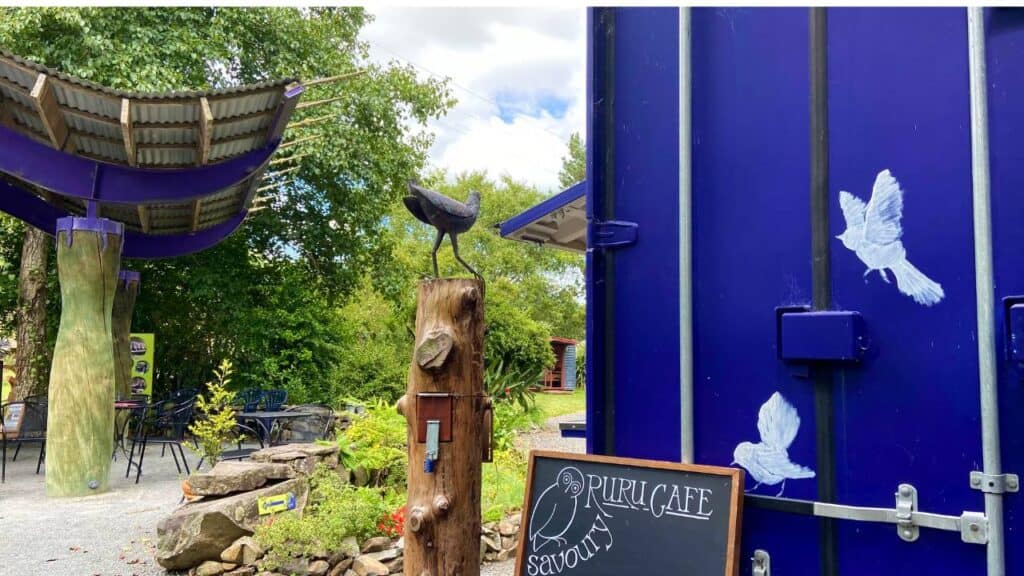
There’s the Roosting Ruru café near the entrance, and visitors are also welcome to bring picnics.
The park hosts regular events, exhibitions and creative workshops – check the website for details.
I’ve taken part in outdoor music events at the park. One time, a chorus of frogs loudly joined in with my choir, singing from their lilypads! We knew the frogs were joining in, because when we stopped singing they did too.

The Sculpture Park – creativity plus nature
The Sculpture Park is an interesting place to visit because it’s a combination of woodland park, outdoor art gallery, and also a great example of environmental land restoration.
It’s a place that can be visited all year round. The paths are suitable for variable weather conditions. There’s a covered area near the café at the entrance.
The Sculpture Park has been recognised as a five star Garden of Significance by the New Zealand Gardens Trust, and as an Accredited Arboretum (Level 11) by ArbNet.

The park’s history – from gravel pit to woodland
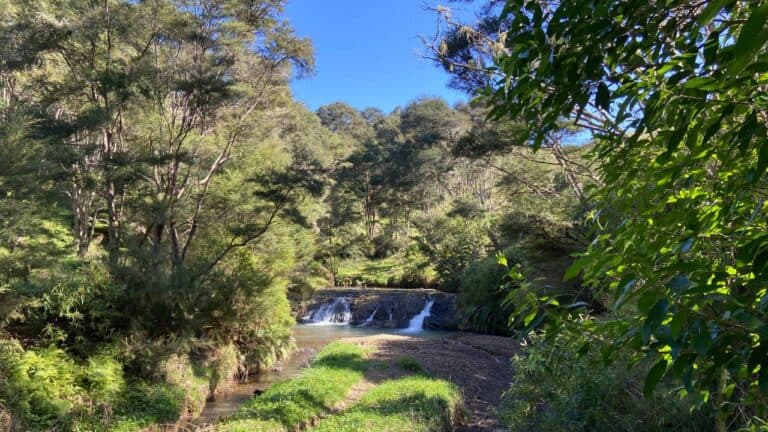
The Sculpture Park is a living project of industrial land restoration. The land was formerly a quarry supplying gravel to build roads in the Waikato region.
The park’s creators, John and Dorothy Wakeling, were looking for a piece of land where they could plant trees and build a home among the trees.
They chose the disused quarry because it was such an interesting piece of land.
John says on the Sculpture Park website, “it was a relic, a piece of industrial history that had supplied the Waikato with gravel for about thirty years. The quarry workings had left behind a place with a strange, skeletal beauty that could only come of large scale human activity. The 30m sheer cliffs, the steep, rock-strewn slopes, the sweeping curves of the quarry roads and the placid settling ponds presented a landscape where form followed function.”
The site has great views across the Waikato to Pirongia, Karioi and the Hakarimatas.
Land restoration over three decades
When the Wakelings started their project there were no established trees on the site and there was very little topsoil.
An initial survey of plants on the site found just a couple of wilding pines and one manuka bush. The predominant plants at the outset were gorse, pampas and blackberry.
The rehabilitation of the land has been a complicated process, due to the lack of topsoil, difficult terrain, strong weed growth and poor water holding capacity, although there was a water source, the Waitakaruru Stream at the lower part of the property. Gradually over 30 years the weeds have been cleared and the landscape has been developed.
International woodlands
The Sculpture Park now has something like 2,000 different trees and plants from all over the world. They’re planted in geographic zones, including Australian, South American, East Asian, North American and New Zealand.
The plantings reflect the challenges of rehabilitating the quarry land. From trial and error, it was discovered that in some parts of the park the soil wasn’t deep enough for many species to survive. English plane trees were a solution in these spaces. They are trees that can thrive even in city streets.
The Sculpture Park has a tree identification app: https://www.sculpturepark.co.nz/plant-identifier

A landscape for art
The first sculpture exhibition, a fundraiser for Hospice Waikato, was held in 2003. The idea for making the park a permanent venue for sculptures came out of that successful event.
Since then the sculpture collections have been gradually building up. Some works have been purchased; others have been gifted to the park; others are on long-term loan.
The sculptures in the park don’t reflect a particular stylistic theme.
There’s such a wide range of styles and materials that everyone will find something they enjoy. Some of the sculptures harmonise with the environment, while others deliberately challenge the senses.
Also, if you’d like to collect a piece for your garden, some of the sculptures are for sale. There’s a page on the website showing the current for sale gallery.
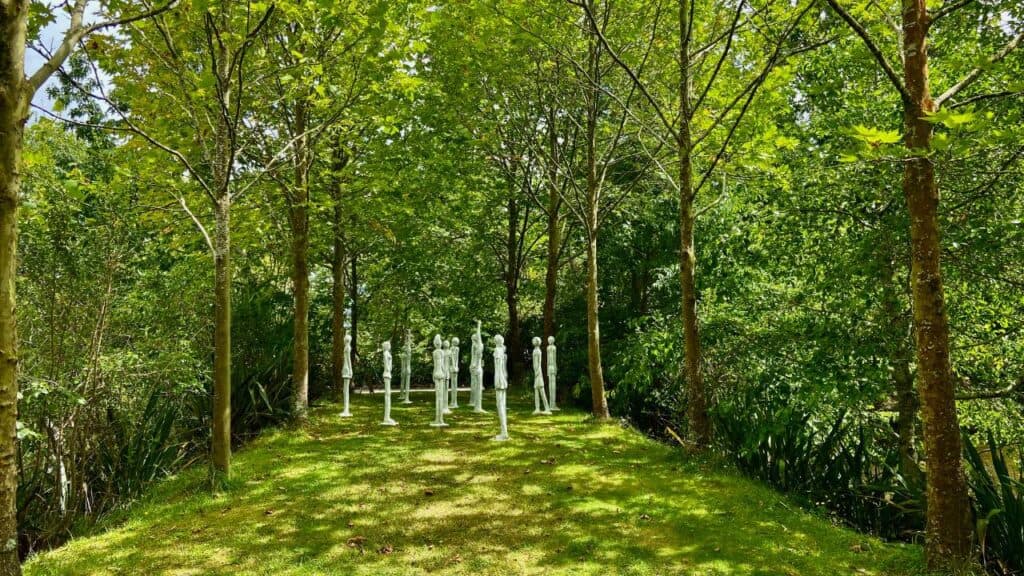
These ones are part of a series called “Swimmingly” by Rebecca Rose.
The meaning of the name Waitakaruru
The Sculpture Park’s Maori name, Waitakaruru, is named after the stream running through the lower part of the property. Waitakaruru means “owl by the water” in Maori.
The ruru or morepork is New Zealand’s native owl, Ninox novaeseelandiae.
It’s a small brown owl. According to Wikipedia, its names are onomatopoeic, reflecting the sound the bird makes. This applies to both the English and Maaori names, “morepork” and “ruru”. I often hear ruru in my neighbourhood at night and the soft owl call does sound like “ruru”. But if I listen again, it also sounds like “morepork”.
Here’s how to say “ruru”. You say the “r”s by rolling your tongue.
There are plenty of artworks featuring ruru along the trails at the Scupture Park.
Walking the trails at the Sculpture Park
There’s a circuit of 2km of trails through the park, with various side quests. There are several long flights of steps and uphill walking paths. So you’ll get some exercise, even if you stop often to look at sculptures along the way.
There’s quite a lot of tree shelter along the paths, and some great places for a picnic.
The paths are pretty good for all-weather walking. However I’d strongly recommend comfortable walking shoes or walking sandals with good soles.
There’s also a road network, which can be used by folks with mobility issues.
There’s a section on the website with advice for folks with babies and toddlers.
The Ruru’s Nest Retreat
This is a cute little one-bedroom retreat cottage at the top of the quarry cliff, overlooking the lilyponds. I haven’t stayed at the Ruru Retreat yet, but it looks gorgeous and has great reviews.

5 Reasons to visit Waitakaruru
- 1. A walk in nature – the tree-lined paths and stairways make for an interesting stroll.
- 2. Artworks in the landscape – the wide range of styles mean there’s something for everyone to enjoy.
- 3. Environmental education and inspiration on all levels – it’s a great demonstration of land restoration. The park hosts school groups and other education groups of all kinds.
- 4. The Roosting Ruru café by the lake is just a gorgeous space for a drink and an ice-cream. It’s a little cafe in a container – almost worth a visit on its own. There’s a great selection of superb locally made products, including Zealong tea, Volare bread and Duck Island ice-cream. It’s outdoors, but there’s plenty of shelter from sun and rain.
- 5. Creative workshops – check the park website for the schedule. Park events include a botanical watercolours workshop, a Japanese weaving workshop and Easter weekend family creativity activities.
The Sculpture Park at a glance:
- Address: 207 Scotsman Valley Rd, Tauwhare
- How to get there: By car is your best option. It’s 30 minutes’ drive from Hamilton, 15 minutes from Cambridge. There’s plenty of parking.
- Getting there by bus: take a regional bus from Hamilton to Tauwhare – Route 25 or similar. Get off at Tauwhare (tell the bus driver you’re going to the Sculpture Park). You’ll have a 1.5km walk along Scotsman Valley Rd to the Sculpture Park.
- Open Tuesday to Sunday, 10am to 5pm.
- Cost: Self-guided walk $20 per adult, $5 for children. Allow a couple of hours to wander the paths, depending on how long you spend enjoying sculptures.
- Wear comfortable walking shoes.
- The Roosting Ruru Café is open for hot and cold beverages and Duck Island ice-cream during opening hours; for lunch on weekends – and wine and cheese events on selected dates.
- Workshops and special events throughout the year. See the website for details.
- The Sculpture Park Waitakaruru Arboretum website
After the Sculpture Park, what’s next?
I hope I’ve given you plenty of reasons to include The Sculpture Park at Waitakaruru Arboretum in your Waikato travel plans—and ideally more than one visit if you love trees and outdoor sculptures as much as I do.
If you enjoyed this post, sign up to my email list to stay in touch. I’ll let you know whenever I publish new ideas for slow, nature-filled day trips around New Zealand’s green heartland.
And if you enjoyed reading about the Sculpture Park you’ll love Taitua Arboretum, a beautiful tree park on the west side of Hamilton. Check out my post about Taitua Arboretum here.