Step back into New Zealand history at Woodlands Estate
A visit to Woodlands Estate feels like time travel. The gardens and the homestead both have a “step back in time” atmosphere.
If you’re interested in history – of gardens, politics, culture, ecology – you’ll enjoy visiting Woodlands. It’s also a great place for a gentle garden walk, followed by lunch at the café.
Woodlands Estate is a 6 hectares (15 acres) park near Gordonton, 20 minutes’ drive northeast of Hamilton. It features an elegant, well-maintained colonial homestead built in the 1870s, and picturesque gardens, with smooth paths, a Monet-style bridge over the river, historic camellias and mature trees from the late 19th and early 20th century.
Outside the homestead are period features including a croquet lawn and a music lawn.
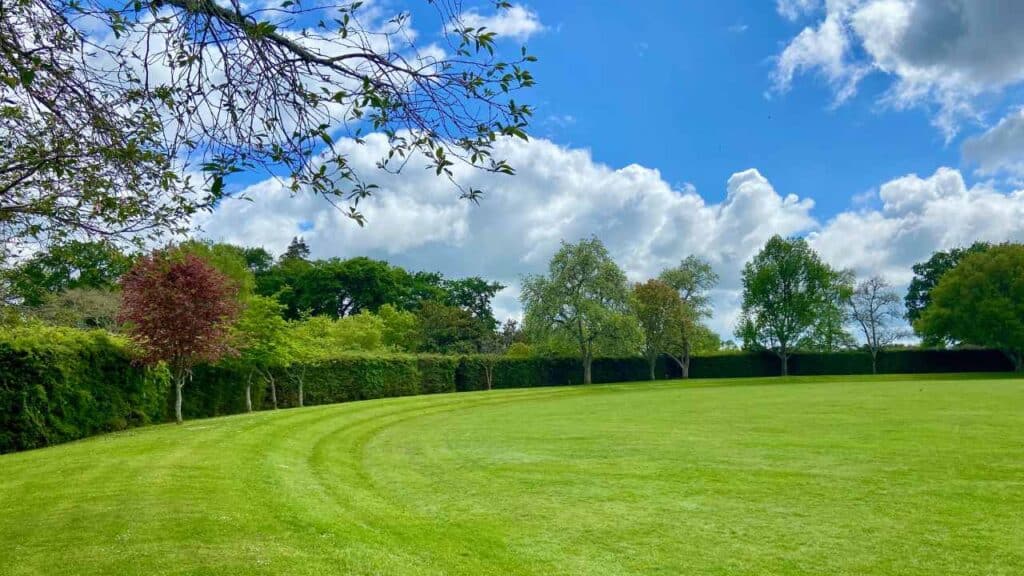
And to underscore the British colonial atmosphere of the place, there’s a cricket oval, well used by young cricket teams in the region on summer weekends. Parents can sit and drink coffee at the café alongside the cricket field, as they watch their kids playing cricket.
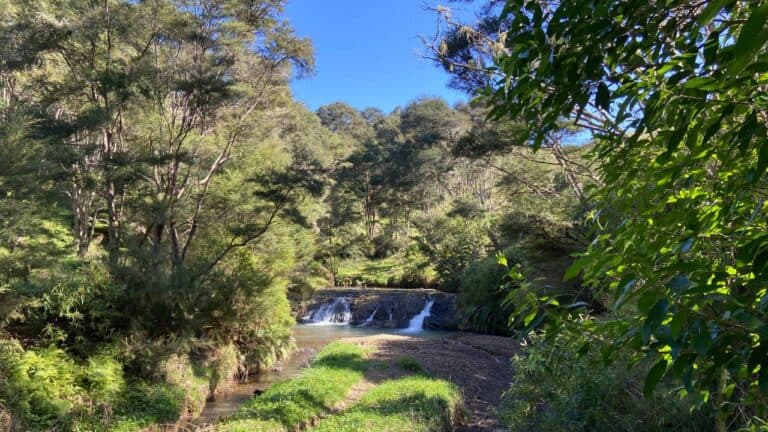
I visited Woodlands after walking in the bush at Pukemokemoke Reserve, which is a short drive along the road.
As well as being a great place for a day trip, Woodlands Estate is also a very popular venue for weddings and other kinds of functions.
The colonial history of Woodlands
Visiting Woodlands feels like a step back into New Zealand’s settler history. In particular, the Waikato’s complicated colonial era. It has a nostalgic, Remains of the Day kind of atmosphere.
The backstory of Woodlands Estate connects up to some key events in 19th century New Zealand history. In particular, the Waikato wars in 1863-64, which led to the raupatu or land confiscations from the original Maori land owners, who were descended from settlers who arrived in the Tainui waka or canoe 800 years ago.
(The land confiscations were declared illegal by a Royal Commission in 1928, but it took until 1995 before the Crown formally acknowledged the confiscations were wrongful and in breach of the Treaty of Waitangi, in the Waikato Raupatu Claims Settlement Act 1995.)
Soon after the land had passed into property investor hands, the homestead was built.
Woodlands Estate was associated with the radical transformation of the low-lying wetland Waikato landscape into profitable farmland. Large areas of swampland were drained and a network of drainage ditches and roads were built. According to the Waikato District Council, it was/is one of the biggest land reclamation projects in New Zealand.
Woodlands Homestead – a showpiece mansion
The homestead is an elegant two-story building, large enough to be called a small mansion. It was built of kauri in the mid-1870s and has a Category 1 listing with Heritage New Zealand.
It’s well restored and the main rooms are attractively presented.
The homestead is surrounded by Victorian/ Edwardian garden design features, including a croquet lawn and a music lawn.
The Woodlands homestead wasn’t really built as a family home – it was a showpiece property that was occupied by the estate managers of the company that spearheaded investment and land development in the region, the Piako Swamp Company (later called the New Zealand Land Company).

The Anchor butter connection
The house was originally built for Henry Reynolds, manager and part-owner of the 35,000 hectare Woodlands Estate. Reynolds lived at Woodlands for a few years in the 1880s. In later years he went on to pioneer factory-made butter and founded the “Anchor” brand of butter, one of New Zealand’s most famous export products.
John Gordon was another estate manager who occupied the house for some years from 1886. The Gordonton district carries his name.
The historian in me wondered why the wives of these notable men weren’t mentioned in the Woodlands story. I did some research and here’s what I found: Henry Reynolds and his wife Elizabeth had six children, four of whom died young. And John Gordon outlived three wives. Life was hard for women in 19th century New Zealand – even wealthy women.
The Woodlands gardens – English style in the colony
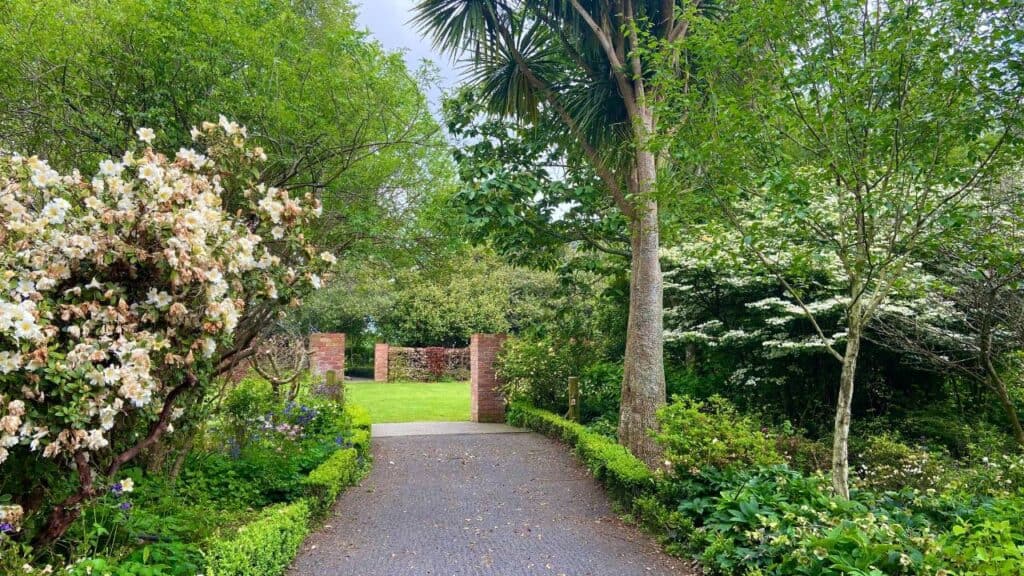
The gardens at Woodlands feature well maintained plantings in late 19th century, early 20th century British Empire style. There are elegantly raked gravel paths and there’s a picturesque Monet-style bridge over the river.
There’s considerable skill involved in this kind of garden. “It’s very challenging to find English plants that cope well in the New Zealand climate,” says my friend Clare Jackson, who’s a garden designer.

Trees of National Significance
Some of the trees at Woodlands are considered to be of national significance, including what’s said to be New Zealand’s largest Eucalyptus, a Liriodendron, an American Ash and a Juniperus Chinensis.
Heritage camellia collection
The camellias at Woodlands are “the country’s most significant collection of old camellias”, originally planted in the 1870s, according to the New Zealand Gardens Trust.
Nostalgic plantings – damask roses and irises
The historic style is enhanced by plantings of old-fashioned roses, and other nostalgic plants like damask roses, irises and clematis.
There’s a huge, ancient wisteria at the main entrance to the homestead. A popular garden plant in the British Empire, it was planted in the 1880s.

The English cricket oval
For me, the most surprising feature of the Woodlands Estate landscape is an English-style cricket oval. It underscores the British Empire atmosphere of the place.
The cricket oval is well maintained and frequently used by young cricket teams in the region on summer weekends. Parents can sit and drink coffee at the café alongside the cricket oval.
I spent many hours sitting by cricket fields when my sons were teenage cricketers. This is by far the most elegant local cricket ground I’ve ever seen.
Three reasons to visit Woodlands
- Gardens that feel like a step back in time. The Woodlands gardens, especially around the mansion house, reminded me of the Katherine Mansfield themed garden at Hamilton Gardens. If you enjoyed that garden, you’ll love Woodlands.
- A colonial era mansion. The Woodlands Homestead is a beautiful two-storey building, well maintained and complete with a croquet lawn and music garden. It’s well worth the $3 entrance charge.
- The cafe on the cricket oval. It’s a café in a great location. Ideally placed for lunch, after a stroll in the gardens and a visit to the homestead. Even if you don’t enjoy watching cricket. Alternatively, I recommend visiting the café after a bush walk at Pukemokemoke Reserve, a short distance along the road.
Woodlands Homestead and Gardens at a glance
42 Whitikahu Rd, Gordonton
Getting to Woodlands: You’ll need a car – there’s no public transport. It’s about 20 minutes’ drive from Hamilton.
Open 9-3.30, 7 days a week.
Cost to visit: It’s free to visit the gardens – but donations are appreciated to support the trust that runs Woodlands.
To see inside the homestead is $3 per visitor – and it’s worth it. (Sometimes the homestead may be closed for a private function.)
There are public toilets
Woodlands Garden Grove Café is open daily from 9am, for pots of tea and lunch overlooking the cricket oval. You could probably have a gin and tonic if you prefer.
Woodlands Homestead and Gardens website
After Woodlands, where are you going next?
I hope I’ve given you plenty of reasons to include Woodlands Estate in your Waikato travel plans.
If you enjoyed this post, sign up to my email list to stay in touch. I’ll let you know whenever I publish new ideas for slow day trips around New Zealand’s green heartland.
And also, check out my post about what to see at Hamilton Gardens.