Tips for slow travel in New Zealand
This is your invitation to slow travel in New Zealand. In this post I’m going to describe what I mean by slow travel, and how it can apply to travel in New Zealand
Slow travel is about quality over quantity. It’s the kind of travel that lets you breathe and enjoy just being where you are. Eat delicious seasonal food, listen to birdsong, breathe fresh air, feel your feet on the ground. And you arrive home refreshed and energized – and even changed in some way.
Maybe slow travel in New Zealand seems like a paradox. You spend up to two days travelling thousands of kilometres at very high speed, just to get here. And as soon as you arrive, you want to see as much as possible in a short time.
Because New Zealand is so far away, and it might be the only time you ever get to visit this beautiful country.
But I don’t think slow travel has to be either/or. The headspace (and heart space) of slow travel is always possible, no matter where you are. You can include windows of slow travel in any journey.
There are various approaches and principles that apply to slow travel. I’m offering a selection here, hoping to inspire you to plan your trip in a slow travel state of mind.
I have experienced both fast and slow travel. I made my first plane flight at nine months and spent what felt like long periods of my childhood getting over jetlag.
When my husband and I took our then-teenage sons to visit Britain and a small part of Europe, we tried to cram far too much into four weeks. We visited family places, had memorable experiences, and ate some great food. But we also got pretty stressed, spending days travelling from one place to the next. And when you’re stressed, it takes time to wind down… which uses up precious days of your holiday…
So my hope, from the other side of the planet to many of my readers, is to inspire you to visit New Zealand in a more spacious, less rushed headspace.
Some of the slow travel related topics I’ll cover include how to get around without driving – is it possible to see New Zealand without driving a car? How to plan your trip, while leaving space for serendipity. How to deal with jet lag. How to regain a state of peace, while you’re travelling in an unfamiliar country, far from home. The possibility of travelling off grid, for at least some of your visit. Ways to connect with Maori culture as a visitor, in a respectful way.
And, taking the road less travelled, and what that could mean when visiting New Zealand.
What is slow travel?
Slow travel isn’t any single thing. It’s the intention, the state of mind, the way you approach it.
Slow travel is about values, connection, awareness, respect for the place you’re visiting and the people who live there. It’s meaningful travel, mindful travel.
I think slow travel also means respect for the value of what you’re getting; recognizing that your tourist dollars make a big difference to the economy of a small country.

Principles and values of slow travel
Connection, and relationships, are important slow travel values.
This could mean personal connection to other people. Slow travellers may stay in smaller accommodation, eat local food, spend time talking to shop owners.
It could also mean spending time in nature, experiencing the trees and the often elusive New Zealand wildlife.
Slow travel and Māori culture
I can’t write about slow travel in Aotearoa-New Zealand without acknowledging the importance of Maori culture. There is so much that Māori culture contributes to the unique features of this country.
Māori are the indigenous people of Aotearoa-New Zealand, the tangata whenua, “people of the land”. Some of the most famous images of New Zealand worldwide are connected to Māori culture: Māori artists and film makers; New Zealand sports teams performing a haka (ceremonial dance) before an event or game.
Many people internationally (including me) find it exciting and inspiring that some natural features of this country have been granted legal personhood, including the Whanganui River, Mt Taranaki and Te Urewera ecosystem. This is due to the efforts of Māori people, and it’s setting international legal precedents.
Ways to connect with Māori culture
Slow travel ways to connect with Māori culture could include learning about the Maori history of the places you visit, or going to one of the famous Māori cultural performances at Rotorua. It could also mean finding out how to pronounce place names, and seeking out Māori-run tourism businesses.
To read more, here’s my post with some information about Māori culture that’s useful for visitors to know about.
The road less travelled
A slow travel principle is taking the road less travelled – choosing destinations off the beaten path.
But maybe you think New Zealand is already way off the beaten path!
However, most of the people who visit this country spend their time in just a few very popular destinations. If you’re thinking “must see places” – that’s what I mean.
This is one of the big reasons behind this blog – giving ideas for places to visit that aren’t always on the tour bus routes.
In the Waikato, where I live, one particular walkway has found its way onto the “must see” itineraries. Every day, the carpark overflows with tour buses and campervans, and the trail gets worn down with thousands of visitors. Meanwhile, half an hour’s drive away there are beautiful peaceful nature reserves with hardly any people.
Slow travel and slow food
Slow travel has some of its roots in Slow Food. This is a worldwide movement highlighting local food producers and traditional cooking. It was founded by Italian chef Carlo Petrini in 1986, to celebrate the regional food cultures of Italy. And, in resistance to plans to build McDonald’s restaurants in Rome, to feed international tourists.
Local and seasonal food
New Zealand is famous for food production, but our local food culture is relatively recent – most of the food grown here is exported.
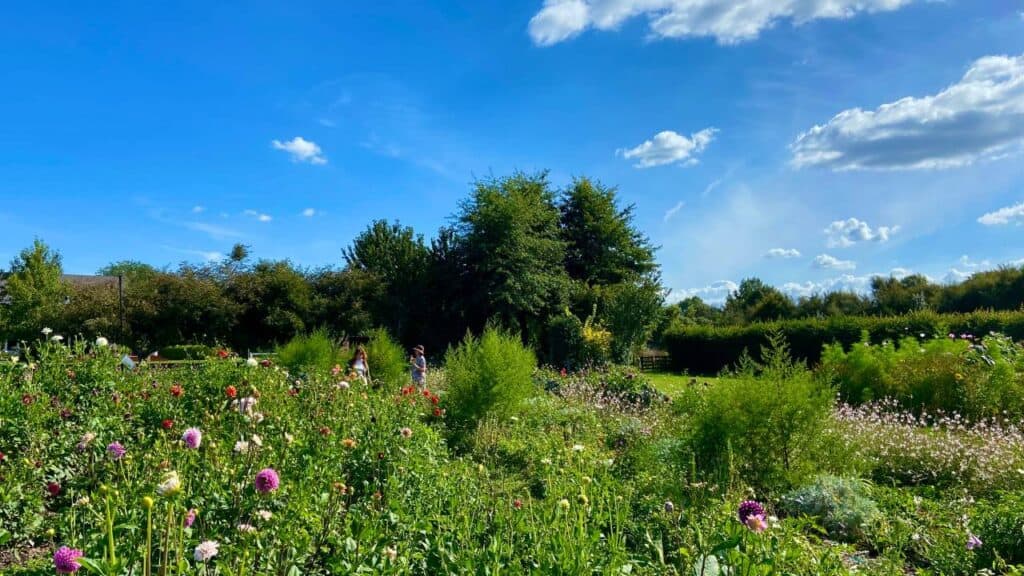
Seeking out delicious local seasonal food is an important aspect of slow travel. And there’s plenty of this in New Zealand – but not so much in supermarkets.
The best places to find local food are farmers’ markets, and directly from growers. Here’s how to find local farmers’ markets in various parts of New Zealand.
And here’s my post with more about where to find local food in the Waikato.
In Praise of Slow
Another inspiration for slow travel is Carl Honore’s book In Praise of Slow: How a Worldwide Movement is Challenging the Cult of Speed. Since the beginning of the 20th century everything about life in western culture has been getting faster. Even the speed at which orchestras play classical music.
Carl makes a good case for the benefits of deliberately slowing down, when we can. Here’s a link to his Ted Talk about In Praise of Slow.
Getting around without a car
If you want to travel more slowly, getting out of your car is an obvious way to do this.
However, New Zealand doesn’t have abundant easy public transport everywhere in the countryside. So most folk (including many New Zealanders) think driving is the only option. But buses and trains do exist!
Check out my post about how to travel in New Zealand without a car.
Other car-free travel options are cycling and walking.
New Zealand on a bicycle
I’ll be honest with you and say that for most people, cycling is not a relaxing way to travel long distances in New Zealand – the road edges mostly don’t have space for bicycles and drivers are impatient and sometimes downright aggressive with cyclists.
But, there are beautiful off-road cycle trails throughout the country, which are great news for slow travellers.
Here’s my post about my adventures riding an e-bike alongside the Waikato River.

Seeing New Zealand on foot
Walking is an important aspect of slow travel, whether it’s day walks, longer hikes, wandering around a city, or a pilgrimage. NB in New Zealand, hiking is often called “tramping”.
The Great Walks are world-famous – but all over the country there are plenty of lesser known walkways.
For serious walkers, there’s the epic Te Araroa long distance walking trail, which stretches 3,000 km from the far north of the North Island to the south of the South Island. Many folk walk shorter sections of the trail.
Local arts, crafts, music
In New Zealand this could mean visiting local art galleries, music events and craft markets, and/or investing in quality pieces by local artists.
When you’re a slow traveller, you’ll have time to find out what’s happening.
Environmental values
Caring about the environment, and being aware of the impact you have as a traveller, is an important part of a slow travel mindset.
When you fly to New Zealand, you’ll already have a fairly high carbon footprint before you walk out of the airport. But, that doesn’t mean you have to abandon all of your environmental values.
Some slow travel options are to use public transport when possible; stay in accommodation where the owners have environmental values; visit eco-sanctuaries and nature reserves; volunteer at local environment events; donate to local activist organisations, for example the group raising awareness about the impact of seabed mining, or an organization supporting a wildlife reserve.
Or, get involved in local environment initiatives when you return home.
How to plan slow travel
Slow travel starts at the planning stage. A balanced itinerary means you get to visit some of your “must-see” places, while also leaving space for unplanned discoveries.
Leave space in your schedule
A slow travel itinerary allows you time to stop and see what happens next. In a blog post about slow travel in Finland, Ananna Das observes that modern tourism often feels more like a scavenger hunt than a journey, ticking off as many destinations as possible.
She recommends leaving 50% of your time unscheduled. This may not feel do-able. But it’s an interesting target to aim for.
Quality over quantity
Visit fewer destinations, and when you arrive, move around less. Accept that you can’t visit everywhere and do everything in one lifetime.
Take a journal, a watercolour set, your knitting project, a paperback book to read.
Stay for longer
Another slow travel principle is “stay for longer in one place”, according to a great piece by Natalie Gale in The Good Trade. Plan your travels to stay in one place for a few days, so you have time to relax and look around.
Slow travel and wellbeing
Slow travel is a much calmer experience than the stress that often accompanies a vacation.
The intention is that you’ll feel genuinely refreshed and connected.
Forest bathing
One way to promote wellbeing is to make sure you spend plenty of time in nature. The Japanese practice of forest bathing, shinrin-yoku, is about immersing oneself in nature to improve health and reduce stress.
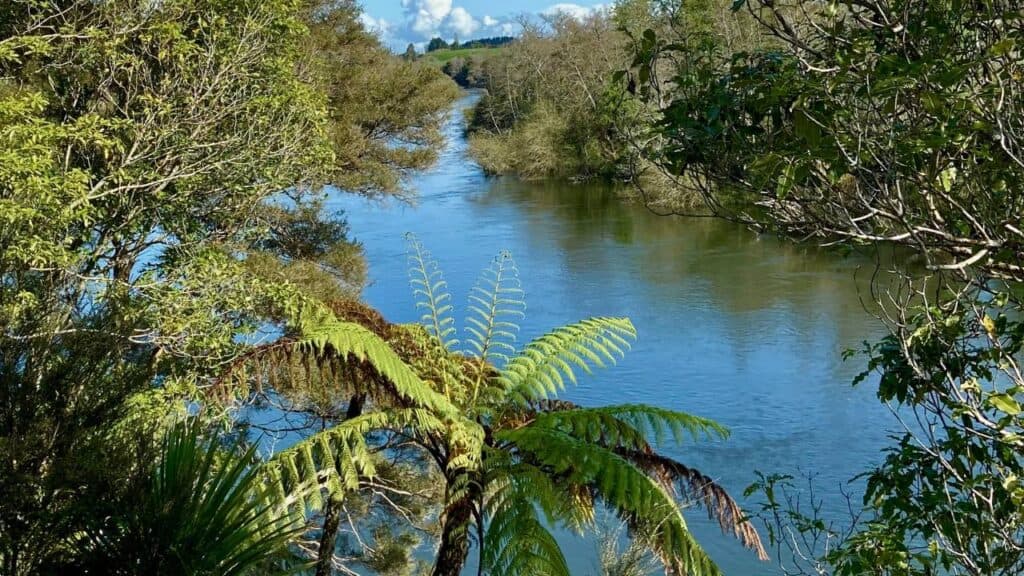
New Zealand is a wonderful place for forest bathing. There are so many bush reserves with trees and huge tree ferns. And as soon as you’re off the main tourist routes it’s easy to find natural spaces with very few people.
Yoga and meditation
Another way to create calm travel is to seek out yoga studios and retreat accommodation that offers yoga classes and/ or meditation.
Dealing with jetlag
When you travel across several time zones, jetlag is inevitable. Taking time to recover your circadian rhythms is a slow travel practice. Forest bathing will be very helpful for this.
For more tips on dealing with jetlag, check out my post Welcome to jetlag.
Off grid travel tips
Consider planning your journey to include time away from your phone and other digital devices. It’s a blessing to the body and mind to be free of news updates and doom scrolling and social media beeps, even for short periods.
Maps not apps
Navigation apps are useful – but they can take some of the mystery out of travelling. On a journey, things reveal themselves along the way. This can only happen when there is space for uncertainty.
When you use a paper map, you have to pay much closer attention to your surroundings than when you’re whizzing through the countryside following instructions from an app.
Here’s a NZ Herald article about one writer’s experience using paper maps.
However, if you’re taking public transport, having access to apps makes your bus travel much easier. Think of it as a trade-off: you’re not having to navigate traffic in a car.
Staying off-grid
Instead of rigorously checking that a bed and breakfast has unlimited internet, stay at a place that’s off-line! For example, at Mana Retreat Centre on the Coromandel Peninsula, internet is only available in the main building, not in the accommodation rooms.
For another kind of off-grid: some back-country accommodation is entirely powered by solar energy – it’s not connected up to the national electricity grid.
Journals and sketch pads
A journal is a perfect slow travel art form. Rather than taking photos of everything you see (and posting to social media), write about your experiences in a journal, and sketch the scenery.
Stock up on watercolours at an art supply store, like Gordon Harris – they have branches in the main cities.
10 New Zealand slow travel experiences
- Star gazing on a clear night – you can do this almost anywhere!
- An evening visit to a glow worm grotto
- Staying on a tidal harbour and watching the tide coming in and out
- Forest bathing
- Cicada sound bath in the bush in late summer
- Birdsong at dawn
- Watching the sunset on a West Coast beach, e.g. Ruapuke
- Meeting some of New Zealand’s improbable flightless birds: takahe, kakapo, kiwi
- Blueberry picking
- Spend a night in a campground beside a surf beach, listening to the sound of the waves
More tips for slow travel in New Zealand
I hope I’ve given you plenty of inspiration for ways to include slow travel in your New Zealand travel plans.
If you enjoyed this post, sign up to my email list to stay in touch. I’ll let you know whenever I publish new ideas for slow day trips around New Zealand’s green heartland.
To find out more about gardens and nature to explore in the Waikato, check out my post about gardens and nature experiences.